
Norway with Kids
Family travel guide for parents planning with children
Top Family Activities
The best things to do with kids in Norway.
Flåm Railway and Aurlandsfjord
The world's steepest railway plunges past waterfalls and mountain farms straight to the fjord floor, kids don't blink. Their noses stay glued to glass for the entire ride. Pair the train with a fjord cruise and you'll knock out a full day of dramatic scenery without forcing anyone to hike.
Viking Ship Museum, Oslo
Three actual Viking ships from the 9th century sit in a quiet museum on the Bygdøy peninsula, the scale of these vessels, preserved in wood, tends to stop kids in their tracks. The artifacts that come with them, sledges, tools, textiles, make Norse history something you can touch, not just imagine.
Trolltunga Hike (teen version) or Preikestolen
Preikestolen (Pulpit Rock) is the more family-accessible of Norway's well-known hikes, 3.8km each way, 330m up, and you're standing on a flat cliff edge with a 604m drop straight down. The views? Absurd. Trolltunga demands more sweat and time. But older teens won't forget it.
Northern Lights Viewing in Tromsø
October through March, Tromsø sits dead-center in the auroral zone. Families book guided northern lights tours kids still talk about years later. The lights refuse schedules, you'll drive into black countryside, neck craned, waiting. That chase? Half the payoff.
Dog Sledding in the Norwegian Arctic
A dog sled team through a snow-covered landscape recalibrates a family's sense of what's possible. The dogs, enthusiastic, friendly, pull hard. Guides stay safety-focused. Small children ride while a parent drives.
Bergen's Bryggen and Funicular
Bergen's painted wooden wharf district feels made for kids, crooked, colorful facades straight from a storybook. The Fløibanen funicular rockets 320m above the city in 8 minutes. Up top: playground, forest trails, troll sculptures built for small hands and big imaginations.
Norwegian Glacier Walk (Nigardsbreen)
Strap on crampons and crunch across Nigardsbreen's blue-green ice, your kids will still be talking about it at Christmas. Jostedal's most accessible glacier arm delivers guided walks built for families.
Oslo's Vigeland Sculpture Park
200 bronze and granite sculptures of human figures fill Oslo's public park, total overload. The Monolith, a 46-foot column of entwined bodies, creeps out adults yet kids can't stop staring. Entry is free. Bring a picnic. The grass stretches wide, perfect filler between museum marathons.
Lofoten Islands Fishing Village Exploration
Red and yellow fishing huts on stilts, Lofoten archipelago looks like nowhere else in Europe. Jagged peaks claw straight from Arctic water. Kids fish off the docks, poke around traditional rorbuer, and spot sea eagles overhead without much effort.
Best Areas for Families
Where to base yourselves for the smoothest family trip.
Bygdøy isn't a suburb, it's a theme park wearing museum clothes. Four heavy-hitters line up shoulder-to-shoulder: the Viking Ship Museum, the Fram Museum (polar exploration ship), the Norwegian Maritime Museum, and the Kon-Tiki Museum. You can walk between them in minutes. Come summer, locals ditch the galleries for the peninsula's beaches, the water's cold, the sand is real, and nobody's pretending they're on vacation.
Highlights: Skip the taxi. Walkable museum cluster means you'll hit three exhibits before lunch, then hit Huk and Paradisbukta beaches by tram in 15 minutes flat. Ferries leave right from the city center. Buy a 24-hour pass and island-hop like a local. Kids? Playgrounds throughout keep them busy while you grab coffee. Don't miss Norsk Folkemuseum open-air village, 160 historic buildings, live actors, zero crowds after 3 pm.
Bergen is your fjord gateway, families base here for day trips and never repack. The city is compact, walkable. Funicular, fish market, Bryggen, all clustered. Flåm, Voss, Hardanger sit within a day's reach.
Highlights: Fløyen hilltop troll park first, because kids won't shut up about it. Bryggen wharf walk after, when the light hits those Hanseatic facades just right. Day trips to Nærøyfjord and Sognefjord run daily, weather permitting. Voss adventure sports for older kids and teens, zip lines, white-water, the works. Accessible by train from Oslo.
Tromsø is your base, real city, not outpost. Northern lights in winter. Midnight sun in summer. Good restaurants. Real infrastructure. The surrounding landscape, fjords, islands, snowy mountains, feels wild. Different from the more-visited south.
Highlights: Skip the brochure fluff. Northern lights tours run nightly, weather willing. Dog sledding operators will let you drive your own team, gloves freeze fast. Polaria Arctic aquarium keeps younger kids wide-eyed at the seal show. Reindeer experiences with Sami guides mean hot coffee inside a lavvu while stories roll out. Midnight sun hikes in summer start at 11 p.m. and still feel like noon.
Kids who can handle big views and cold water will love Lofoten. The journey is long. The payoff is instant. These islands run on island time, slow, deliberate, built for families. No theme parks. No queues. Just space, water, and that Arctic light that hangs around forever.
Highlights: Rorbuer fishing cabin stays put you right on the water. Sea eagle safaris deliver, white-tailed birds, wingspan 2.4 m, gliding overhead. Beach access is cold but often empty; you'll have the sand to yourself. Viking museum at Borg nails the saga vibe with reconstructed longhouse and battle reenactments. Hiking suits various ages. Trails range from flat coastal walks to steeper ridge climbs. Fresh seafood culture dominates, stockfish drying on racks, king crab pulled from the fjord, cod tongues fried in butter.
Lillehammer gets skipped, wrongly. Families score big here: the 1994 Winter Olympics gear is still live, including a bobsled track that fires tourists down the ice. Next door, Maihaugen open-air folk museum stacks 200 historic buildings into one excellent playground. Step outside town and Gudbrandsdalen valley hands you instant access to hiking and cycling trails.
Highlights: Norway's best theme park isn't in Oslo, it's Hunderfossen, where trolls guard water slides and fairy-tale houses tilt like drunk trolls. Maihaugen open-air museum sits ten minutes away; you'll walk 200 historic buildings in one afternoon. Lake Mjøsa, Norway's largest, warms enough for summer swimming by July. Winter flips the script: Hafjell's ski slopes light up until 7 p.m., 15 minutes from the lake. Olympic Park keeps the adrenaline running year-round, bobsled rides hit 120 km/h on the 1994 track.
Family Dining
Where and how to eat with children.
$100, 140. That is what dinner for four costs in Oslo, two adults, two kids, one mid-range table. Norway's dining scene is more family-friendly than its minimalist-Nordic reputation suggests. Restaurants hand over high chairs without a blink. Kids' menus appear in most mainstream spots, and no one glares when a toddler drops a fork. Grocery prices sting too. But Norwegian supermarkets are excellent. Smart families cook in cabin or apartment accommodations and dodge the worst damage. Still, budget for at least a few restaurant meals, fresh salmon, cod, and shrimp deserve the splurge.
Dining Tips for Families
- Skip the restaurants. Norwegian supermarkets, Rema 1000, Kiwi, Coop, stay open late and pack every shelf. Fill a cabin kitchen once, and you'll slash food costs by 50, 60% versus eating out every meal.
- Norwegian families flip the script: middag lands at lunch, not dinner. Smart move. Restaurants slash prices for midday specials, often far cheaper than evening menus.
- Bergen's Torget sells fresh shrimp, reker, straight off the boat. They're cheap, they're delicious, and kids go wild for the peel-and-eat game. Turn it into an activity.
- Norwegian kids' menus: simple, reliable. Pasta. Fish cakes, fiskekaker. Hot dogs. The hot dog culture is strong. Quality is surprisingly decent.
- Grab brunost. Norwegian brown cheese, odd, sweet, kid-approved, turns grocery haul into trail fuel. Bread, cheese, cured meats from any store pack light and taste better on a summit.
Cod, salmon, Arctic char, cooked plain, often the freshest seafood your kids will ever taste. Bergen's Bryggen area and the harbor towns dish up reliable choices. Budget for one or two splurges each trip.
Norwegian bakeries sell excellent pastries, open-faced sandwiches (smørbrød), and soup, good for breakfast or a casual lunch. They always have seats. Prices stay reasonable. Kids will eat here without a fight.
Pizza dominates Norway. Every town of any size has at least one joint, and the quality is decent. When the kids crash and you need an easy dinner, it's a fallback that won't bankrupt you.
Skip the restaurants. Norwegian supermarkets stock ready-made salads, hot rotisserie chicken, sharp cheeses, and smoked salmon that rivals any café, at a fraction of restaurant prices.
Tips by Age Group
Tailored advice for every stage of childhood.
Toddlers in Norway? Easy in cities. Oslo and Bergen roll smooth, wide sidewalks, elevators in every station, playgrounds wedged between cafés. You won't fight a single curb. Head beyond the rail lines and the story flips. Fjord villages cling to slopes. Gravel tracks tilt, stairs appear without warning. A wheeled stroller becomes dead weight fast. Swap it for a backpack carrier once your route leaves pavement. The views are still worth the sweat.
Challenges: Cobblestones in Bryggen will wreck your stroller wheels, guaranteed. Those fjord paths aren't much better; they're rocky, uneven, and stroller-hostile. Summer daylight is the real sleep killer. Norway's extreme daylight from June, July will have your toddler wide awake at 10pm unless you've got blackout curtains or a travel shade for cots. No exceptions. Restaurant waits drag on forever. Norwegians eat dinner late, 7, 8pm, which won't match your toddler's schedule. Plan accordingly or face meltdowns.
- Pack a good travel blackout blind, 24-hour daylight in summer will wreck toddler sleep without one.
- Norway's cabin culture is toddler-friendly. Fenced gardens, simple spaces, nothing breakable.
- A soft-structured baby carrier won't trap you on fjordside paths. Cobblestone towns? Strollers can't handle them. You're free.
- Norwegian playgrounds (lekeplasser) are impressive, and they're everywhere. Every neighborhood has one. Use them. Three-thirty slump? Hit the swings. Kids burn energy fast. You get quiet.
Five to twelve-year-olds? Norway's perfect guests. They're tall enough to tackle Preikestolen, still young enough to gasp at troll tales. They'll stare wide-eyed at the Viking Ship Museum, then paddle kayaks and crunch across glaciers without a moan. Kids this age don't just visit, they leave changed. The raw scale of Norwegian nature, the Viking stories, the winter dark, the endless summer light, all of it sticks.
Learning: Norse mythology hits different when you're standing in front of a real Viking sword. Norway threads these lessons together like nowhere else, kids trace runes in the same country where trolls still guard bridges in storybooks. The Sami indigenous culture of the north brings reindeer herding and joik singing into sharp focus. Arctic ecology and polar exploration history (Fram Museum) let them handle ice cores and polar bear pelts. Norway's role in WWII comes alive at the Norwegian Resistance Museum in Oslo, well-presented and age-appropriate, with secret radios and ration cards kids can touch. The geological story, fjords carved by glaciers, clicks instantly for kids who've just covered earth science. They'll spot the U-shaped valleys and hanging waterfalls that their textbooks only hinted at. Bring a mythology book and watch them gasp at troll references everywhere, from souvenir shops to trail markers.
- Hand the kids the map. Norwegian maps are free at tourist offices and letting them trace the route turns every mile into their adventure.
- Grab one. Norwegian mythology books aimed at children are sold in airport shops, they help kids decode the troll and giant references you'll see everywhere in the country.
- The Resistance Museum in Oslo hits hard. Moving, sharp, and pitched for ages 9+, it refuses to tidy the occupation yet treats the story with steady care.
- Anchor each region with one big-ticket moment, glacier walk, dog sled, whale safari. That single promise keeps school-age kids locked in for the long haul.
Norway cuts through teenage boredom like a hot knife. Outdoor adventure, photography, unusual experiences, this country delivers all three. The adventure catalog runs deep: via ferrata, kayaking, glacier walks, backcountry skiing, whale safaris, northern lights. These are high-engagement experiences that make even the most jaded teen look up from their phone. The cities work too. Modern. Navigable. Teens won't feel trapped in some endless museum tour.
Independence: Let your 14-year-old loose, Norwegian cities are built for teenage freedom. Oslo's metro and tram lines don't require a PhD; Bergen's cobbled core is tight, bright, and quiet after 10 p.m.; and the local habit is to leave strangers alone. Hand them a map and they'll handle Grünerløkka's vintage shops, Sandviken's steep wooden lanes, or Tromsø's midnight-sun harbor without you hovering. The only real danger waits past the last bus stop, weather that flips from postcard to blizzard in twenty minutes. Any teen who wants to hike must pack map skills and real rain gear, not just a charged phone.
- Hand teenagers the reins for one activity or half-day in each destination, resentment of the family itinerary drops fast.
- Norway hands teenagers their first real mountain test, well-marked trails, rescue systems, achievable but challenging objectives.
- Teens into photography, listen up. Lofoten's Arctic light isn't good, it is extraordinary. Golden hour doesn't blink by. It can stretch most of the day in late summer.
- The fjords and Arctic north can be phone-dead zones. Tell teenagers now. They'll need offline maps downloaded, plus realistic expectations.
Practical Logistics
The nuts and bolts of family travel.
Norway's public transport is excellent between major hubs but sparse in rural areas. Trains connect Oslo to Bergen (the famous Bergen Railway), Trondheim, and Stavanger, these are scenic and family-friendly with plenty of space. For fjord regions and the north, renting a car unlocks the most flexibility, and Norwegian roads are generally well-maintained. Mountain passes can close in winter, check Statens Vegvesen (road administration) conditions before driving. Strollers are well-accommodated in Oslo's metro (T-bane) and trams, with elevators in most central stations. Car seat regulations mirror European standards. Rental companies supply them for around $10, 15/day, book in advance. Ferries cross many fjords and are part of the road network rather than tourist add-ons; they accept cars and are unremarkable in the best sense.
Norway's public system is rock-solid, EU/EEA visitors flash their EHIC and get treated like locals. Non-EU travelers? Pack travel insurance with medical cover. One ER trip without it will empty your wallet fast. Oslo University Hospital dominates the map. Every town keeps a legevakt, emergency clinic, open after hours. Pharmacies (Apotek) sit in every town center, stocking infant paracetamol, diapers, and formula. Norwegian brands deliver quality. The big two chains: Apotek 1 and Boots. Supermarkets sell diapers (bleier) and formula (morsmelkerstatning) too, usually cheaper than pharmacies.
Norwegian cabin rentals (hytter) are how locals travel, and smart visitors have started copying them. Each comes with a kitchen for DIY meals, outdoor space, and usually a view that postcards can't match. Finn.no and Norway's Cabin (norgesbooking.no) list thousands, thousands, of these places. In cities, skip the shoebox hotel room. Apartment rentals give you the same kitchen access plus extra square footage, often for the same money or less. Many hotels now sell proper family rooms with bunks built in. Always ask before you pay for two separate boxes. One catch: check if your place provides bedding for small children. Some cabin rentals won't hand over cot linens, you'll need to pack your own.
- Rain here doesn't ask permission. It owns the place. Pack waterproof outer layers for every family member, rain isn't optional, it's structural.
- Pack hiking boots or trail shoes with ankle support for kids, even if you swear you won't hike much.
- Insulating mid-layers regardless of season. Even summer evenings in the fjords can drop sharply
- Arctic sun at low angles? It'll scorch you fast. Bring SPF 50+, summer visits demand it.
- Mosquitoes will swarm you in Norwegian forests, pack insect repellent. Summer inland, near water, they're real.
- A light carrier or baby backpack for toddlers on uneven terrain where strollers won't work
- Norway's scenic routes are beautiful but long, ferry crossings and train journeys demand entertainment.
- Bring a reusable bottle. Norway's tap water ranks among the world's best, clean, cold, and completely free everywhere you go.
- The Oslo Pass covers entry to most Oslo museums plus unlimited public transport, worth it for 2+ days in the city; children's passes are significantly cheaper
- Norway's 'allemannsretten', right to roam, lets you hike, camp, and hit beaches on uncultivated land for free. Much of Norway's best scenery? Zero cost.
- Ferry meals on long crossings are expensive, pack your own food for any journey over 90 minutes.
- Skip the crowds. Cabin rentals in non-peak weeks, avoid school holiday weeks in late June, July, drop 30, 40% cheaper for the same quality.
- Norwegian museums won't charge kids, usually. Free entry for children under 16 or under 18. Always check before you pay adult rates for teenagers.
- Bergen Card, Stavanger's version, Tromsø's twin, they all mirror the Oslo Pass formula. Don't buy blind. Pull up your itinerary, tally every museum, tram ride, ferry crossing. If the sum beats the card's price, swipe your card. If it doesn't, pay as you go. Simple math.
- Rental cars in Norway hit toll roads everywhere. Grab a Norway Pass card, it handles every toll automatically and you'll skip the booth fumble.
Family Safety
Keeping your family safe and healthy.
- ! Mountain weather turns nasty fast, check yr.no every single morning before you lace up. These peaks don't forgive light gear, even in July.
- ! Water safety near fjords and river crossings will kill you faster than in most destinations. Currents in fjord narrows can be unexpectedly strong, strong enough to yank boots off. Water temperatures even in summer rarely exceed 15°C. Hypothermia risk from falls is real. Keep young children well back from unfenced cliff edges and fjord drop-offs.
- ! The midnight sun will wreck your kids' sleep worse than you think, buy blackout gear before you land, not after you're stuck with a sobbing four-year-old at 2 a.m. Exhaustion snowballs into meltdowns that poison the whole trip.
- ! Norway's tap water is safe everywhere. Everywhere. You can drink straight from mountain streams in remote areas, no purification needed. Still, teach kids to avoid streams near grazing areas. Common sense.
- ! Ticks don't wait. From spring through autumn, forested and grassy areas, western and eastern Norway below 1,000m, are prime hunting grounds. Check kids after long grass or forest play. Pharmacies stock tick removal tools.
- ! Snow tires aren't optional, they're mandatory from November to April in most regions. Rental cars arrive equipped. But mountain road conditions can turn brutal fast. Check Statens Vegvesen road conditions before any pass crossing. Never drive a mountain route in poor visibility with kids in the car.
- ! SPF 50 every 90 minutes, no exceptions. Arctic sun sits low, UV still burns. Kids won't feel the heat. Cloudy days? Still apply.
Book Family Activities
Top-rated family experiences in Norway.
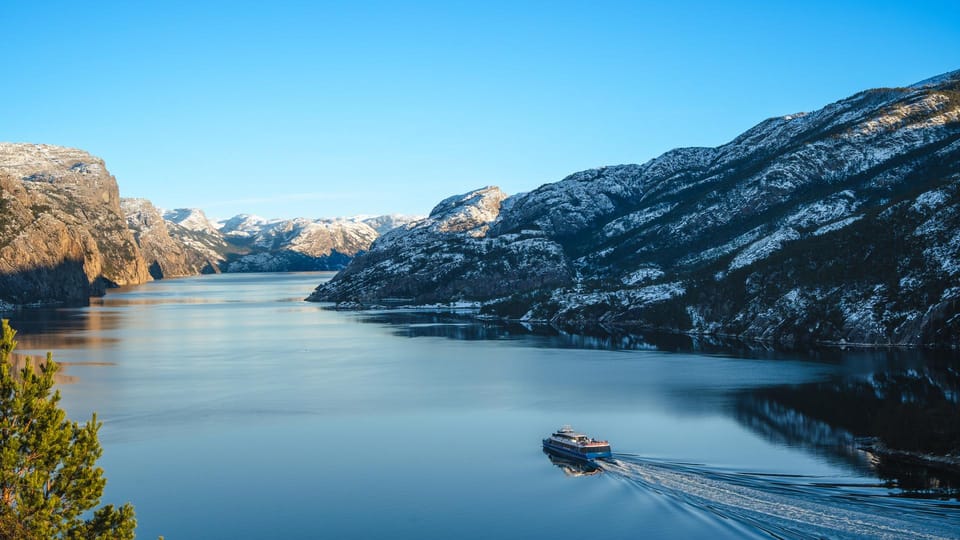
Electric Fjord Cruise to Lysefjord and Preikestolen
Sail silently aboard an eco-friendly boat along Lysefjord

Oslo Nature Walks: Island Hopping Tour
Discover Oslo's excellent coastal scenery on an island-hopping tour.
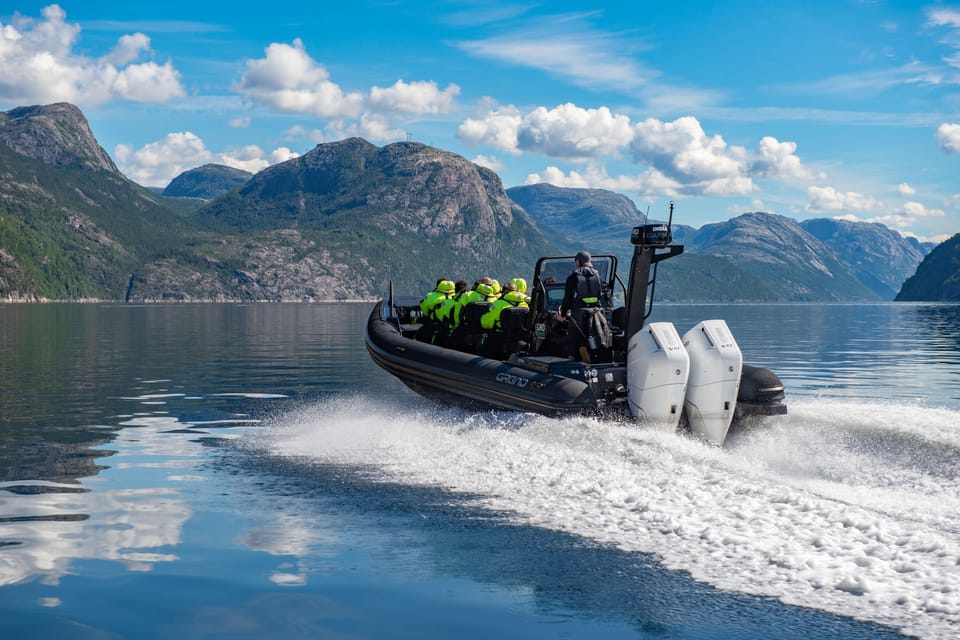
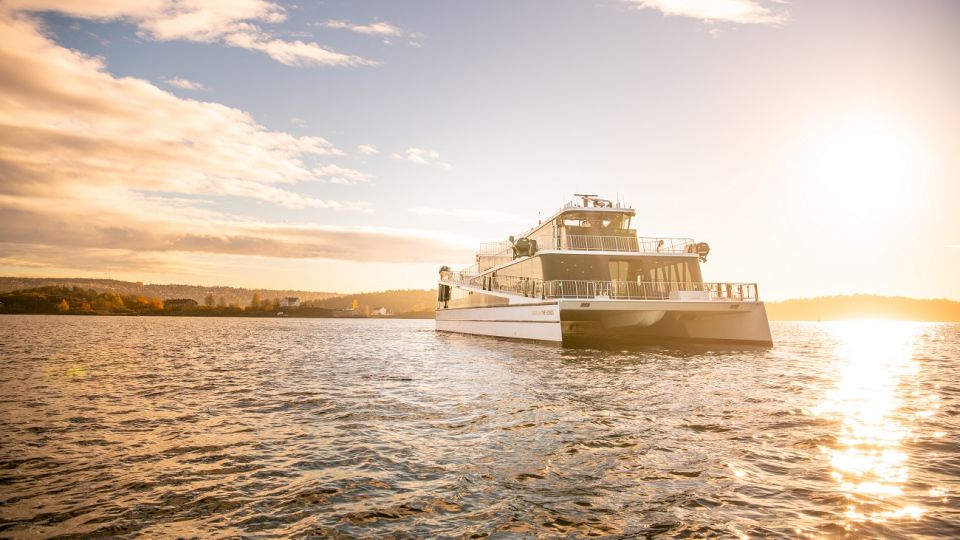
Scenic Fjord Cruise with Audio Guide Commentary
Take a cruise and explore the inner parts of Oslofjord on an electric ship.
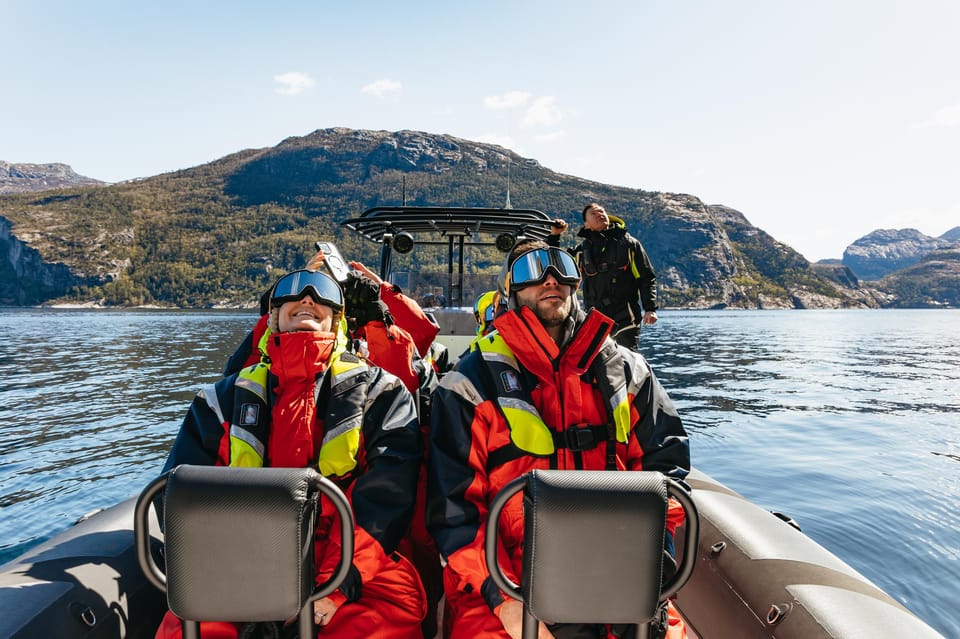
Lysefjorden and Pulpit Rock RIB Boat Tour
A front-row seat to one of Norways most famous fjords
Explore Activities in Norway
Didn't see anything interesting yet?
Browse Viator's full catalog of tours, day trips, food experiences, and private guides in Norway.
See All Norway Tours on ViatorReady to plan your trip to Norway?
Now that you've got the research covered, here's where to go next.