
Things to Do in Norway in November
November weather, activities, events & insider tips
Low Season · Budget Friendly
November Weather in Norway
Temperature, rainfall and humidity at a glance
39°F (4°C)
High Temp
32°F (0°C)
Low Temp
3.3 inches (84 mm)
Rainfall
70%
Humidity
⚠ First snow arrives early. Mountain passes ice over fast. Rental cars must swap to winter tires November 1. Police checkpointss fine on the spot.
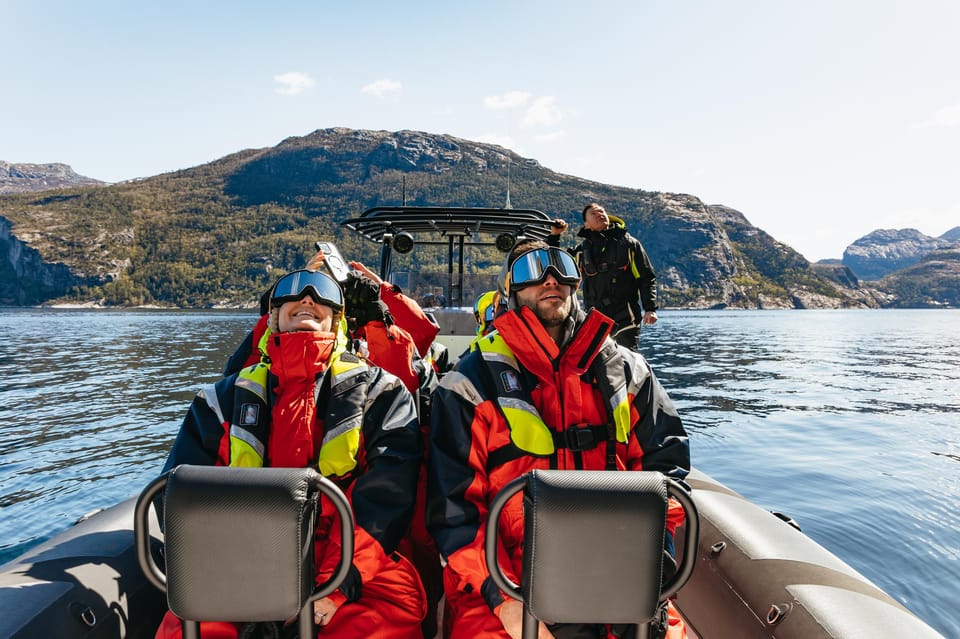
⚠ Wind whips the coast. Thirty five Fahrenheit feels like twenty five. Boat decks amplify the bite. Bring full shell gear or shiver.
Is November Right for You?
Weigh the advantages and considerations before booking
Advantages
- + November hands you 15-plus hours of darkness per night in Tromsø and Finnmark, still cold. But not the savage bite of January and February. Geomagnetic activity climbs after the autumn equinox, so real Kp-4 and Kp-5 shows turn up far more often than in deep winter. A full auroral display, green bands pulsing, folding, purples and reds exploding above, defies words once you are back under ordinary skies.
- + Norway without the queues, the Flåm Railway, which carries around 1,000 passengers per train at peak summer, runs half-empty in November. Preikestolen's car park, which requires timed entry and advance booking from May through September, is open on arrival. The panoramic viewpoints above Geirangerfjord that have a person planted at every camera angle in July are essentially yours alone. The country's landscapes don't change, but your relationship to them does when you're not negotiating for space.
- + Candles hit every café table at 3pm sharp, November is when koselig, Norway's deliberate coziness against darkness and cold, finds its true home. Cinnamon rolls steam in konditorier, those traditional pastry shops lining Bergen's lanes. Wood smoke drifts from hytte cabins above the city. This isn't tourist theater. You're watching Norwegians live October through April exactly as they always have, no performance, just winter as locals know it.
- + Norwegian hotels slash prices in November, those same rooms that bleed wallets dry in June and July suddenly become affordable. Waterfront properties in Bergen and Oslo, booked solid months ahead during summer, now sit wide open. The fjord view upgrade? A realistic choice at 40% less, not some fantasy. Harbour panoramas that cost a fortune in peak season drop to pocket-change levels. You'll walk in without reservations. You'll score the corner suite. Total bargain.
Considerations
- − Oslo's daylight shrinks fast, seven hours of grey on November 1, barely six by month's end. Tromsø flatlines earlier: November 27 marks polar night, zero sunrise, no horizon glow. This isn't a quirk, it is a hard limit. If you need sunlight to stay sane, this trip will break you. Anyone with seasonal sensitivity must confront this honestly. Don't assume vacation immunity.
- − Bergen, which holds a credible claim to being the wettest major city in Europe, earns its reputation hardest in November, the city averages around 230 mm (9.1 in) of rainfall this month spread across roughly 20 rain days. You will get wet. Not intermittently damp: soaked, repeatedly, from multiple directions. A proper hardshell jacket with sealed seams isn't optional gear here; it's the difference between enjoying Bergen and lasting it.
- − November kills Norway's headline hikes. Trolltunga at 1,100 m (3,608 ft), Besseggen in Jotunheimen, and Kjeragbolten above Lysefjord, closed, or worse. Ice. Snow. Full mountaineering kit required, and the weather won't care. Those Instagram shots? July and August only. November trades rock for other rewards, just not those specific ones.
Best Activities in November
Top things to do during your visit
Northern Lights Chasing Around Tromsø
November gives you the best shot at serious aurora displays without risking frostbite during a four-hour stakeout. Tromsø sits at 69.6° north latitude, by mid-November the sky goes black at 2pm local time, handing you a 15-plus-hour window each night. The organized tours that push into the inland valleys east and south of the city aren't scenic joyrides. They apply real science to cloud-avoidance, targeting zones where coastal cover breaks down. November beats December and January on three counts: geomagnetic activity spikes after the autumn equinox, temperatures hold between -3°C and 2°C (27°F and 36°F) instead of plunging to -15°C (5°F), and the snow hasn't piled high enough to punish long outdoor vigils. A Kp-5 display, green curtains rippling across the northern sky, edged in red and purple, looks nothing like the photos. The colors shift. That motion is what stays with you.
Booking Tip: Reputable Tromsø-region operators now guarantee a free second-night retry if clouds trash your first outing, if that clause is missing, walk away. Most buses roll at 6pm, you're back by midnight. Statistically, three November nights is the floor. Four gives you a solid shot at one clear sky. Weekend slots? Reserve two to three weeks ahead. Current options wait in the booking section below.
Fjord Cruise Through Nærøyfjord and Aurlandsfjord
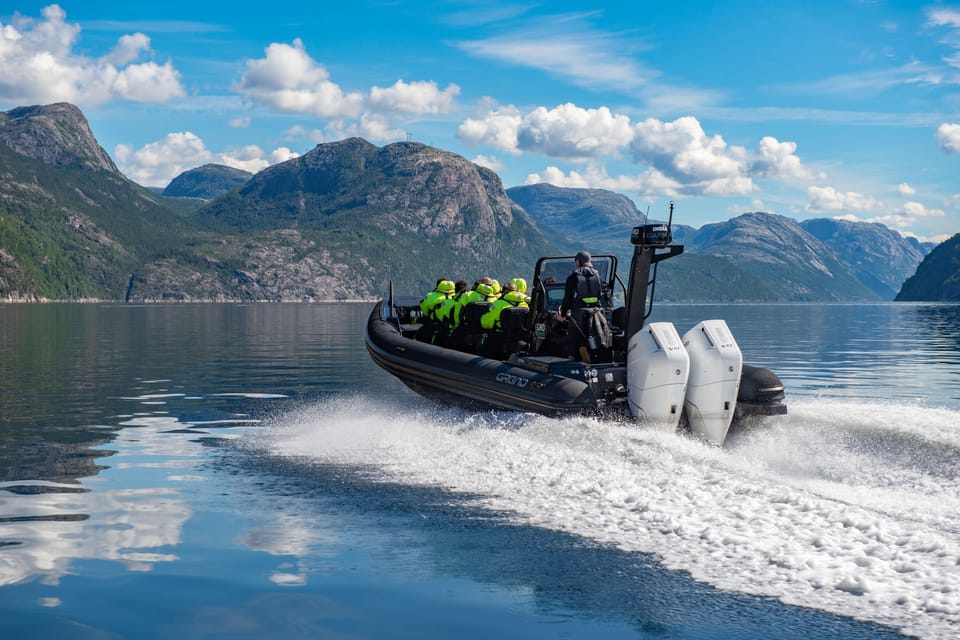
November light in Nærøyfjord is liquid gold, so low it skims the black water like a laser. At 250 m (820 ft) across, Europe's narrowest fjord squeezes between walls that leap 1,400 m (4,593 ft) and snow starts sticking at 500 m (1,640 ft). The waterfalls, fed by autumn rain, roar, not trickle. Summer crowds? Gone. No cruise ships, no kayaks, just your ferry and the echo of your own breath. The Flåm-Gudvangen leg still takes two hours. The cliffs feel close enough to high-five. Cold air smells of pine and rain. Silence, engine hum, waterfall drums, total hypnosis.
Booking Tip: Flåm Railway still sells out in November, book that leg seven days ahead even though the whole Norway in a Nutshell circuit runs half-empty. The Bergen, Flåm train, Flåm, Gudvangen ferry, then bus and rail onward stays fully operational. Fjord ferries rarely fill, so walk-ups usually sail. A same-day round trip from Bergen is doable if you like 14-hour marathons. But one night in Flåm village buys a dawn departure that nails the best light. Check the booking section below for current cruise and combo options.
Dog Sledding and Sámi Reindeer Experiences in Finnmark
Snow across the Finnmark plateau becomes reliable by the second week of November. This vast, wind-scoured upland stretches toward the Russian border at elevations around 300, 400 m (984, 1,312 ft), good for dog sledding. Running a team through birch forest at -5°C (23°F), you'll hear only paws on packed snow and the occasional bark from lead dogs. Norway doesn't get more authentic. The Sámi people have herded reindeer here for millennia. Several communities around Kautokeino and east of Tromsø offer cultural encounters during the active herding season, November. These aren't theatrical reconstructions. They're working operations that accept visitors as a secondary part of their economy. A reindeer herd moving through falling snow against absolute tundra silence at dusk. The faint possibility of aurora overhead. This sensory memory won't soften with time. The contrast between warmth inside a lavvu (traditional Sámi tent) and the cold outside, that's part of the experience.
Booking Tip: Dog sledding tours from legitimate operators book two to four weeks ahead for November weekends, around the Norwegian autumn school half-term (typically early November). Demand spikes then. Look specifically for tours where you drive your own sled rather than riding as a passenger. The difference in engagement is significant. Properly-run tours make this option available, insist on it. Sámi cultural experiences should be booked through community-authorized channels. The tourist board in Alta or Tromsø can point you toward verified operators. See current adventure and cultural tour options in the booking section below.
Oslo Museum Circuit
November strips Oslo bare, and the city's museums shine. The Munch Museum, which slid into its Bjørvika waterfront home in 2021, owns the planet's biggest hoard of Edvard Munch: not just The Scream in every version but the whole sweep of a man who spent a lifetime turning anxiety, desire, and death into paint and pastel. Grey November light makes the canvases ache in ways July blue never could, curatorial accident or not. Cross the water to Bygdøy Peninsula. Inside the Fram Museum sits the real polar ship that hauled Nansen and Amundsen into the ice, Fram herself, built in 1892 as the strongest wooden hull ever launched, now parked in a climate-controlled cathedral. Walk her deck. Duck into the cabins where men endured two winters in darkness, spooning canned meat and doing sums by oil lamp. The ship's bulk, and the cramped bunks, shuts visitors up fast. The National Museum, which opened its new Aker Brygge building in 2022 as the Nordic region's biggest art space, is still courting crowds. Weekday mornings in November feel like private viewings.
Booking Tip: Pre-book your timed-entry tickets to the Munch Museum, on weekends and Norwegian public holidays. The Oslo Pass covers entry to most major museums plus unlimited public transit. In November, when the balance tips toward indoor time, it tends to represent solid value compared to individual admissions. Vigeland Sculpture Park, Oslo's open-air museum of 212 bronze and granite figures, is free and worth a morning under first frost or light snow. The Monolith column at the park's center, 14 m (46 ft) with its 121 intertwined human figures, carries a different weight in winter. See current guided Oslo tour options in the booking section below.
Flåm Railway and Hardangervidda Plateau Crossing
The Flåmsbana climbs 865 m (2,838 ft) in just 20 km (12.4 miles) from sea level at Flåm village to the mountain station at Myrdal. Twenty tunnels. Cut through granite. A gradient that hits 5.5%, steep enough to demand five independent braking systems on each train. November strips the carriages to a fraction of summer crowds, and the view outside flips from fjord to snowfield in sixty minutes flat. Mandatory stop: Kjosfossen waterfall. The train halts. You step onto the platform. The falls thunder down a 93 m (305 ft) drop beside you. Cold mist slices through whatever you're wearing. By mid-November the spray has frozen solid on the railings. Next, the Bergensbanen rolls across the Hardangervidda plateau from Myrdal to Bergen. Europe's largest mountain plateau, up to 1,222 m (4,009 ft). Deep snow already blankets the ground. On a clear day the plateau looks like a white planet, flat, empty, no human structure in sight for miles.
Booking Tip: Weekend seats on the Flåm Railway vanish fast, even in November, during Norwegian school holidays. Book online at least a week ahead. It is worth it. The complete Norway in a Nutshell circuit, Oslo to Bergen via Myrdal and Flåm, eats a full day and demands tight timing of rail and ferry legs. Run the Bergen-Flåm ferry in reverse, match it with the uphill train, and you've got an easy round-trip loop from either city. On the Bergensbanen, demand left-side seats Oslo, Bergen; the payoff is the best angle over Ustaoset and the plateau. Current rail and combo tour packages sit in the booking section below.
Bergen City Walking and Fløyen Summit Trail
Bergen gets soaked in November, more annual rain than almost anywhere else in northern Europe, and this month tops the charts. But the city was built for it. The wooden Bryggen warehouses, trading since the 14th century, glow under rain they never manage in dry weather. Duck behind the painted facades: narrow alleys hide family-run galleries, craft workshops, tiny shops that haven't changed hands for generations. Fish-market stench rides the harbour breeze even now. Ride the Fløibanen funicular 320 m (1,050 ft) to Mount Fløyen. Trails turn muddy, sometimes icy. Yet the payoff is a full sweep of seven mountains and fjord arms pointing every direction, worth soggy boots. Mount Ulriken, 643 m (2,110 ft), swaps the funicular for a cable car and serves tougher winter routes for anyone ready to test waterproof gear. Leafless trees and pewter water look brutal, beautiful, once you quit waiting for autumn colour.
Booking Tip: The Fløibanen funicular runs year-round with no advance booking required in November, queue times are negligible compared to summer. The Ulriken cable car operates subject to wind conditions and occasionally closes on storm days. Check the day's forecast before building plans around it. Bergen's Fish Market at Fisketorget moves partly indoors to the Mathallen in autumn but remains one of the best places in western Norway to eat fresh seafood without formality. See current Bergen guided walking and hiking tour options in the booking section below.
Where to Stay in Norway in November
Hand-picked hotels across price tiers for November travellers.
Packing Checklist
Bookmark this page — your progress is saved between visits
Need the full list with shopping links?
Climate-specific gear, brand recommendations, and what to leave at home.
View Norway Packing List →Essential Tips
Insider knowledge and common pitfalls to avoid
Insider Knowledge
YR.no, the Norwegian Meteorological Institute's weather service, nails Norwegian terrain in ways foreign apps can't touch. This isn't trivia. Norwegian weather runs on microclimates: fjord bottoms bask in sun while plateaus above vanish into whiteouts. Cross-reference it with the Space Weather Prediction Center's Kp-index forecast when aurora hunting; a Kp reading of 3 or above over Tromsø usually means visible lights for anyone clear of city glow.
Snow already blankets Hardangervidda when November rolls around, and the 1909 Bergensbanen still punches through it on the exact same rails. The Oslo-Bergen railway earns its reputation, left-side window seat, Oslo to Bergen, gives you the widest angle on Ustaoset and the plateau beyond. Six and a half hours door-to-door; catch the morning train and you'll roll into Bergen under afternoon light. Vy.no releases seats 90 days out, and weekend November departures vanish faster than you'd think.
Koselig, pronounced KOO-se-lee, means the coziness Norwegians weaponize against darkness and cold, and November is when they do it best. A cup of kaffe and a kanelbolla (cinnamon roll, baked that morning) at a proper konditori on a grey November morning isn't for tourists. It is how Norwegians survive this season. The best versions come from independent bakeries and traditional konditorier, not chain cafes. Oslo's Mathallen food hall in the Vulkan neighborhood deserves an hour of any itinerary for this reason, and it runs considerably less crowded in November than in summer.
Skip the tax. Norway's tourist VAT refund scheme lets foreign visitors claw back the VAT on eligible purchases over a minimum threshold amount at the airport on departure. In a country with Norway's general price levels, this adds up to real money on quality wool garments or outdoor gear, the things most visitors buy anyway. Demand the refund form when you pay and hoard every receipt. Airport refund desks at Oslo Gardermoen and Bergen Flesland move fast, no long queues in November.
Avoid These Mistakes
Bergen soaks up 230 mm (9.1 in) of rain in November, pack wrong and you'll drown. Tromsø stays dry yet drops to -10°C (14°F) the same month. Oslo turns cold and grey, dusting streets with light snow. Treating Norway as one climate zone when booking gear and planning activities is a rookie mistake. The difference between Bergen (perpetually wet, rarely freezing), Tromsø (dry, arctic), and Oslo (cold, grey, occasional light snow) is significant enough that packing for one city won't prepare you for another. Most Norway itineraries cross regions, pack for the most demanding conditions you'll hit, not the average.
Oslo hands you seven hours of grey light in early November, six by month's end, and only a fraction of that counts for photography. Most newcomers still block out six to eight hours of outdoor plans that demand clear sight, then wonder why 3:30pm feels like surrender. Four focused hours beats an over-ambitious day every time.
One night in Tromsø won't cut it. Two? Still gambling. The aurora doesn't care about your schedule, cloud cover wins more often than you'd think. Tromsø sits in a coastal climate where cloud cover is a persistent variable. No tour operator can override this weather-dependent phenomenon. The math is brutal: more nights equals more chances. Experienced Norway aurora travelers book three nights minimum. This absorbs the probability of one or two clouded-out nights. Four nights? That gives a high chance of at least one clear viewing window. Don't be the person who flew home disappointed.
Ready to plan your trip to Norway?
Now that you've got the research covered, here's where to go next.
Book Experiences in Norway
Top-rated things to do in Norway this November

Explore More Activities in Norway
Didn't see anything interesting yet?
Browse Viator's full catalog of tours, day trips, food experiences, and private guides in Norway.
See All Norway Tours on Viator