

Things to Do in Norway in March
March weather, activities, events & insider tips
Low Season · Budget Friendly
March Weather in Norway
Temperature, rainfall and humidity at a glance
41°F (5°C)
High Temp
28°F (-2°C)
Low Temp
1.6 inches (41 mm)
Rainfall
70%
Humidity
⚠ Sudden wind gusts along exposed Atlantic coast roads can reach 80 km/h (50 mph) and buffet camper vans. Grip the wheel. Reduce speed. Expect the shove.
Is March Right for You?
Weigh the advantages and considerations before booking
Advantages
- + The northern lights are on borrowed time in March. Aurora season effectively ends when the midnight sun begins diluting the sky from late April onward, which means early-to-mid March sits at a sweet spot: Tromsø and Svalbard still have six to eight hours of proper astronomical darkness per night, aurora probability remains high under the auroral oval at 69°N latitude, and the cold, while real, tends to be less punishing than January and February. Travelers who missed the January window often find March gives them a second, underrated chance at the display.
- + Since 1892, Holmenkollen Ski Festival has turned mid-March into something else entirely. Up to 80,000 Norwegians swarm the hillside above Oslo, national costumes, hand-knitted sweaters, the works. Grilled pølse and pine resin drift through cold air while ski jumpers arc 140 m (460 ft) above a city that tumbles all the way down to the fjord. Nothing in Scandinavia matches it, and March's weather window couldn't be more perfect.
- + March is when Norwegian ski resorts, Hemsedal, Trysil, Geilo, Norefjell, lock in their best snowpack. The season's accumulated snowfall means reliable coverage even at lower elevations. Days have lengthened enough for proper afternoon skiing in actual sunlight. Weekday crowds thin considerably outside of school holiday weeks. Late March brings spring skiing conditions on south-facing slopes: heavier, warmer snow that advanced skiers seek out all season. North-facing runs stay firm and fast all day, two different mountains on the same hill.
- + March in Oslo means elbow room at the city's best museums. The Munch Museum at Bjørvika, the expanded National Museum on Rådhusplassen (reopened 2022 with one of the strongest European collections in Scandinavia), and Vigeland Park in Frogner all feel private. July turns them into crowd-control exercises. In summer you're wedged between selfie sticks to glimpse The Scream. In March you can claim fifteen solitary minutes with The Sun, Munch's 8 m × 4.5 m (26 ft × 15 ft) mural most visitors stride past on their hunt for the famous one.
Considerations
- − Pack for two climates. March in Norway can swing 20 degrees in a single itinerary. Oslo hovers between -4°C and 5°C (25°F to 41°F); cold, yes, but the streets stay salted and cafés blast heaters. Tromsø plays a harsher tune: nights drop to -10°C to -15°C (14°F to 5°F) like clockwork, and wind ripping across the open fjord shaves another ten degrees off the mercury. Felt temperature slips below -20°C (-4°F) before you've tightened your hood. City-breakers who board the night train north in nothing thicker than a wool coat step onto Tromsø's platform underdressed, and hypothermia isn't a souvenir.
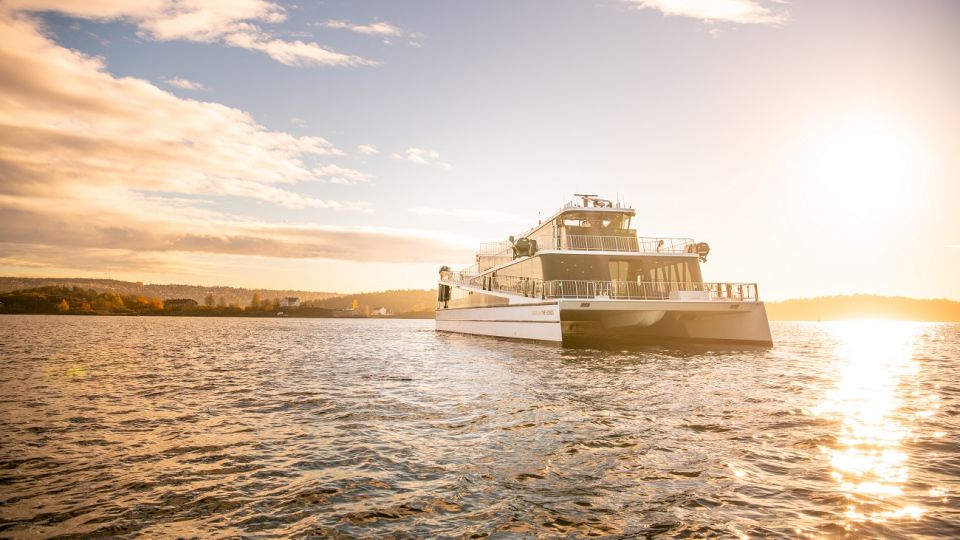
- − Forget the glossy brochures, those classic fjord boat photos can't be shot in March. Summer ferries through Nærøyfjord and Geirangerfjord, the ones that give you that glacial-blue water squeezed by vertical granite, have either shut down for winter or limp along on skeleton schedules: two, maybe three sailings a week. The Flåm Railway still runs year-round, and snow transforms the valley into something almost other-worldly, yet the "Norway in a Nutshell" loop that most first-timers build their trip around is chopped short. Check every leg, every single one, against the current winter timetable before you lock in hotel nights at either end of a fjord route.
- − March in Norway is meteorologically argumentative. One week you'll get high-pressure bluebird days. The next, a three-day low dumps 60 cm (24 inches) on Hemsedal, closes mountain passes, and strands drivers. Bergen, the rainiest city in Western Europe, averages precipitation on two out of every three days in March. That is not a stay-home signal, Norwegians demonstrably head out. But itineraries that treat the weather as predictable tend to get restructured mid-trip.
Best Activities in March
Top things to do during your visit
Northern Lights Expeditions from Tromsø
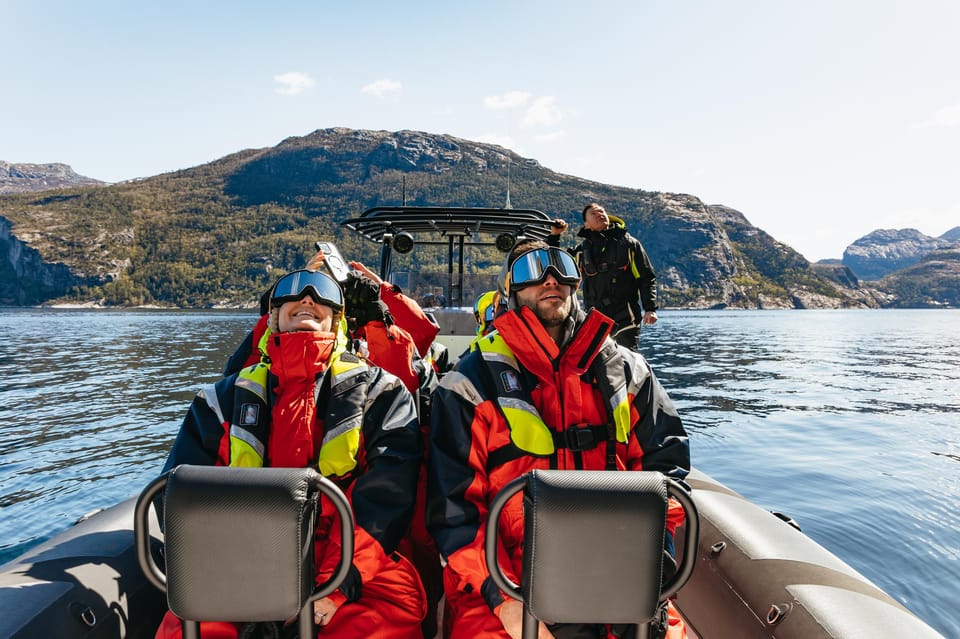
March is the last reliable month for chasing the aurora before the midnight sun begins shortening the usable darkness window from late April onward. Tromsø sits precisely under the auroral oval at 69°N latitude, the atmospheric band where charged solar particles enter the atmosphere and generate the light, and on a clear night the display can run from faint green smears low on the horizon to full curtains of crimson and magenta that fill the sky from zenith to waterline. The temperature hovers around -8°C to -12°C (18°F to 10°F) on a clear night out on the fjord, the ice creaks under whatever boat or snowcoach you're on, and the silence has a physical weight to it that's hard to describe accurately in advance. Guided excursions head inland or out onto the fjords to escape Tromsø's light pollution. The good operators track weather forecast models obsessively and will sometimes drive 100-150 km (62-93 miles) to find a clear window in an otherwise overcast sky. March tends to bring slightly more stable weather than January and February, which can improve success rates compared to the peak aurora months. Aurora activity is unpredictable, you can spend four clear nights in Tromsø with no display, but March's improving weather probability makes it worth the attempt, and the combination with ski daylight hours makes a three- or four-night Tromsø stay satisfying even if the aurora doesn't appear. Book through current options in the booking section below.
Booking Tip: Book 2-3 weeks ahead through operators affiliated with the Norwegian Tourist Board. Look specifically for guides who describe their weather-chasing approach and will relocate when local skies are overcast, this distinguishes serious operators from those who set up in one spot and hope. Boat-based tours offer more geographic flexibility than snowcoach excursions. See current 2026 availability in the booking section below.
Alpine and Cross-Country Skiing at Norwegian Resorts
March is Norway's ski month, not its epilogue. Hemsedal, 200 km northwest of Oslo, sits on 2-3 m of settled base above 1,400 m, deeper and denser than anywhere else in late season. Trysil, the country's biggest resort by slope count, keeps intermediates busy for a week without repeating a groomer. Late March light is the trick: low sun turns the snow surface gold, south faces soften to that heavy spring texture experts crave, and the evenings stretch long enough for a thermos outside while alpenglow hits the peaks. Cross-country skiing, langrenn, matters more to Norwegians than downhill. The Oslomarka forest holds 2,600 km of tracked trails, and on Sunday mornings locals ski straight from the metro with a packed lunch, a ritual unmatched anywhere else. Ride Oslo's T-bane Line 1 to Frognerseteren, 450 m above the city, rent skis at the lodge, and glide into Nordmarka, even if you never touch a resort. Check the booking section below for current guided ski-touring options.
Booking Tip: Weekend lift passes at major resorts during Holmenkollen week and Norwegian school holiday weeks vanish weeks ahead. Gone. Midweek skiing in March stays wide open, plenty of space. Book 4-6 weeks ahead if your dates clash with any major Norwegian county's school break. The specific weeks shift by region, so pull up the county calendar for whichever resort you're targeting. See current booking options below.
Oslo Museum Circuit and City Culture
March is when Oslo's museum district finally breathes, no July queues, no scavenger hunt for audio guides. The M-story Munch Museum at Bjørvika, a jagged tower by Estudio Herreros cantilevering over the waterfront since 2021, keeps 26,000 works by Edvard Munch. That includes 26 versions of The Scream, each in a different medium or period. The famous one is here. Yet the real payoff is standing before The Sun, 1911-16, an 8 m × 4.5 m (26 ft × 15 ft) blast of light Munch painted for Oslo University's ceremonial hall, or tracing the late canvases where his anxiety uncoils into something odder, stronger. The National Museum, back on Rådhusplassen since 2022, stacks Norway's national collection next to Monet, Cézanne, Van Gogh, plus a decorative-arts wing strong enough to swallow three focused hours. Vigeland Park in Frogner, Gustav Vigeland's open-air parade of 212 bronze and granite figures across 80 acres, wears March snow like a stage set. The Monolith, 121 bodies clawing skyward, cuts through white ground. Summer grass only softens the blow. The park is free, open year-round, and at 3 PM in March you might have the golden low light and the granite all to yourself. Check the booking section below for current Oslo guided tours.
Booking Tip: Book ahead online for the Munch Museum and National Museum, you'll skip the line. March crowds are light, so even a same-week reservation usually works. The Oslo Pass bundles both museums with public transport. Do the math, if you'll hit three paid sights, you'll save. Mondays? Closed. Most major museums shut their doors that day. Audio guides at the Munch Museum? Download before you arrive; don't rent at the counter.
Bergen Base and Flåm Railway Winter Excursion
Bergen in March moves like a city that's finally alone. The seven mountains ring the city in snow above 400 m (1,312 ft); the Bryggen wharf district, that UNESCO-listed row of medieval-style wooden merchant houses rebuilt after the 1702 fire, their painted facades mirrored in harbor water that may still carry small ice floes, belongs to locals, not tour groups. The fish market at Torget stays open year-round: wolffish, king crab from the far north, and Atlantic cod line the counters in March, and the smell of cold brine and smoked fish is Bergen's signature scent even now. From Bergen, the Flåm Railway (Flåmsbana) stays one of Europe's most compelling train journeys in any season: 20 km (12.4 miles) of track dropping 863 m (2,831 ft) from Myrdal to Flåm, through spiral tunnels inside mountains, past the Kjosfossen waterfall framed by ice, and into the Aurlandsfjord valley. In March the valley walls carry snow right to the waterline, and the hamlet of Flåm is quiet in a way July, when cruise ship passengers arrive in waves, simply is not. The summer ferry from Flåm into the Nærøyfjord runs limited or no service in March, so treat the railway as the destination rather than the transfer leg. See current Bergen and Flåm excursion options in the booking section below.
Booking Tip: Book Flåm Railway early even in March. The seats aren't scarce, Flåm back to Myrdal only runs three to four departures daily off-season. Bergen accommodation fills fast for late March because Påske is coming. Norwegian Easter lands on April 5 in 2026, and domestic travelers flood the country the week before. For early-to-mid March, 2-3 weeks ahead is plenty.
Svalbard Arctic Wilderness Expeditions
March in Svalbard is pure gold. At 78°N, 800 km above the Norwegian mainland, the sun just clawed back from polar night, and by mid-month you score six to eight hours of low, honey-coloured light, enough to spot fresh polar bear tracks along the coast. Yet still dark enough to feel the Arctic punch. Dog sledding here, eight to ten Greenlandic huskies dragging you across frozen fjords and tight mountain passes at -15°C to -20°C, delivers a silence so total you'll catch your own heartbeat between paw beats. No other place in Norway comes close. From Longyearbyen, snowmobiles rip 100 km over sea ice to Pyramiden, the Soviet mining town abandoned in 1998 and kept since as a frozen museum. March locks the fjords solid. Routes closed to summer boats swing open. The archipelago holds about 3,000 polar bears across an Ireland-sized sweep, sightings possible, never promised, and every guide shoulders a rifle once you leave town. Check current Svalbard expedition options below.
Booking Tip: Book Svalbard expeditions 6-8 weeks ahead, dog sledding outfits run tiny teams and March is prime, so slots vanish before January. Reserve Longyearbyen lodging the instant you lock in excursions. Rooms are scarce. Outside town, wilderness travel demands a licensed guide or proof you can handle bears. Check current choices in the booking section below.
Where to Stay in Norway in March
Hand-picked hotels across price tiers for March travellers.
Packing Checklist
Bookmark this page — your progress is saved between visits
Need the full list with shopping links?
Climate-specific gear, brand recommendations, and what to leave at home.
View Norway Packing List →Essential Tips
Insider knowledge and common pitfalls to avoid
Insider Knowledge
April 5, 2026, that is Påske Sunday, and the whole of Norway bolts for the hills. From March the week-long Easter break packs every cabin, ski slope, and Bergen guesthouse. Prices spike to July levels. Miss it, and you'll pay summer rates for a bunk. Book late-March nights months ahead; early-March calm won't repeat. Foreigners never see Easter crush like this.
Line 1 of Oslo's T-bane ends at Frognerseteren, 450 m (1,476 ft) above the city inside Nordmarka forest. In March the snowpack is still solid. Locals step off the metro, grab rented skis at the station lodge, and vanish into pine and birch tracks for a half-day. They ride back downtown before dinner. Almost no tourist knows this ritual exists. Cost: one metro ticket plus ski rental. It is the most Norwegian thing you can do in Oslo.
Norwegian law grants you something most European countries don't: allemannsretten. This universal right of access lets you ski, hike, and camp on uncultivated private land, no permits, no fees. Just stay 150 m (492 ft) from occupied buildings and don't behave like an idiot. In March, this opens the entire countryside. The Jotunheimen mountains. The Hardangervidda plateau. Any competent ski tourer can go anywhere. Locals find it notable that visitors don't know this. They're right to be surprised, it is unusual.
Norwegian schools don't shut for winter break all at once, vinterferie rolls county-by-county through February and early March. Oslo empties in early February. Other counties empty later. Result: Hemsedal or Trysil can feel like peak season on a calendar week that looks dead everywhere else. Planning midweek to dodge crowds? Check the county holiday calendar before you lock anything in. A vinterferie midweek versus a plain midweek at a major Norwegian resort is the difference between lift queues and ski-straight-on slopes.
Avoid These Mistakes
Pack for Tromsø, not Oslo. March in Oslo is cold but urban-manageable; Tromsø operates in a different register entirely. Travelers who plan a city break in Oslo and add a spontaneous overnight train to Tromsø, or join a Hurtigruten ship heading north, arrive underprepared for conditions where wind chill regularly reaches -20°C (-4°F). Outdoor excursions require proper kit as a baseline rather than an option. Pack for the coldest point of your entire itinerary, not the warmest.
Don't build a March itinerary around summer fjord routes without checking winter schedules first. The Nærøyfjord express boats from Flåm to Gudvangen either don't run at all or offer just two to three weekly departures in winter, compared to near-hourly service in summer. The 'Norway in a Nutshell' circuit still works in March, though in modified form: the Flåm Railway and Bergen Line train both continue year-round. But the boat legs that make it the full experience require careful verification before you commit hotel nights on either end. Check current seasonal schedules directly before booking.
KP index forecasts are only reliable 30 minutes ahead. The 24-hour and 3-day forecasts travelers swear by? They're rough guesses with wide margins. Two nights in Tromsø gives you a weak shot at clear skies and aurora. Three nights is the real minimum for decent odds. The lights can blaze at 9 PM and vanish by 10 PM. They won't wait while you finish dinner. They don't care about your flight home.
Ready to plan your trip to Norway?
Now that you've got the research covered, here's where to go next.
Book Experiences in Norway
Top-rated things to do in Norway this March

Explore More Activities in Norway
Didn't see anything interesting yet?
Browse Viator's full catalog of tours, day trips, food experiences, and private guides in Norway.
See All Norway Tours on Viator