
Things to Do in Norway in July
July weather, activities, events & insider tips
High Season · Book Early
July Weather in Norway
Temperature, rainfall and humidity at a glance
72°F (22°C)
High Temp
56°F (13°C)
Low Temp
3.4 inches (86 mm)
Rainfall
70%
Humidity
Is July Right for You?
Weigh the advantages and considerations before booking
Advantages
- + The midnight sun is Norway's single most disorienting gift, and July is when it peaks. North of the Arctic Circle, roughly above Bodø, about 1,000 km (620 miles) north of Oslo, the sun doesn't set at all for most of the month. Instead it circles the horizon in a slow amber arc that turns the Lofoten Islands into something no single photograph can hold. Even in Oslo, daylight stretches past 19 hours: the sun drops around 11 PM and rises before 4 AM. That extra light rewires how the entire country works. Restaurants fill at 10 PM. Locals swim in the fjords after work. The hills above Bergen swarm with midnight walkers. First-time visitors can't prepare for it, and can't stop talking about it later.
- + July is the only month when every major trail in Norway is open. Trolltunga, Preikestolen (Pulpit Rock), Kjeragbolten, the Besseggen ridge, these routes demand snow-free ground to be safe, and July delivers. The snowpack has pulled back, paths are dry, footing is solid. Long days mean a 10-hour hike starting at 6 AM ends with evening light still burning. Stand 700 m (2,300 ft) above Lake Ringedalsvatnet on Trolltunga, wind ripping off the Hardanger plateau, fjords and mountains stacked to every horizon, this is the Norway postcards try, and fail, to capture.
- + July is when Norwegian salmon finally tastes like salmon. Bergen's Fisketorget opens daily, and the difference hits you immediately, smoked salmon arrives in paper cones while smoke still curls from its surface. Live tanks hold langoustine and lobster that snap at fingers. Fish soup carries salt water and fresh dill, not the chemical tang of commercial kitchens. Tromsø and Ålesund follow the same rhythm. Shrimp arrive that morning. King crab comes from the Barents Sea. Cod has never seen a freezer. This fishing culture stretches back to the Vikings, and in July it's not history, it's right there on the quayside. The salmon you've been eating at home? Different species entirely.
- + Snowmelt pounds down in July, fjord waterfalls at full roar. The Seven Sisters in Geirangerfjord, seven separate ribbons diving off the plateau, crash into the water with spray that leaps 50 m (165 ft) clear of the cliff. Vøringfossen, Norway's most photographed drop, plunges 182 m (597 ft) into Måbødalen gorge. The impact shivers through the viewing platform boards. Come August the torrent eases. By September some falls shrink to silver threads. July keeps them near peak, and the mix of full waterfalls, alpine meadows at their greenest, and light that never fully quits delivers the year's most dramatic fjord scenery.
Considerations
- − July is the most expensive month in an already expensive country. Peak demand meets limited beds, you'll pay considerably more than June or September for the same room. The small villages at the heart of the fjord experience, Flåm, Geiranger, Eidfjord, share maybe a dozen hotels between them. They book out months ahead. By June what's left is either budget dorms grabbed by package tourists or high-end lodges with prices that make Oslo look reasonable. Lofoten, now locked into the international photography circuit, has followed the same arc: the red rorbuer that were cheap crash pads ten years ago now charge rates set by global demand. Book accommodation first, activities second. Start looking in January for July travel.
- − July in Norway? The crowds at Trolltunga can crush you, unless you plan for them. Hundreds of hikers clog the 27 km (17 mile) round trip on peak weekends, and the rock platform itself hosts 30 to 50 people queuing for photos at any moment. Preikestolen suffers the same fate: the 3.8 km (2.4 mile) trail from the car park becomes a human conveyor belt on summer Saturdays, and the cliff edge demands elbows-out positioning. Meanwhile, fjord cruise boats crowd the same waterfall walls in synchronized herds. This chaos isn't destiny. Early starts and weekday timing wipe out most of it. But you must plan deliberately, not stumble into the mess on arrival.
- − July is Norway's best month, unless you're on the western coast. Bergen clocks 15 rainy days then, and the fjord mountains spin up weather systems that crash over you in minutes. The Lofoten Islands, naked in the Norwegian Sea, can string together three or four grey, drizzly days even at midsummer. Midnight sun? Overcast midnight sun gives you a dull half-light that drags all night, no drama, just gloom. Norwegians insist there's no bad weather, only bad clothing. They aren't being philosophical; they're telling you to pack a shell.
Best Activities in July
Top things to do during your visit
Trolltunga Guided Hiking
July is the month for Trolltunga, that tongue-shaped rock platform 700 m (2,300 ft) above Lake Ringedalsvatnet near Odda in Hardanger. The trail demands 27 km (17 miles) round trip with roughly 800 m (2,625 ft) of elevation gain, and July keeps it snow-free with solid footing and long light. Crowds are the price. Peak summer weekends see dozens lined up on the summit platform for their photo on the rock. Here's the move: start hiking at 9 or 10 PM on a weekday. In July the sun stays up past midnight, the summit glows in near-horizontal amber, and you'll share the rock with a fraction of the daytime mob. Guided groups offer real safety on a trail where weather can flip from warm and clear to cold and wet within an hour, and a qualified guide knows the route's trickier sections when mist rolls across the upper plateau.
Booking Tip: Book guided hikes 3 to 4 weeks ahead for July weekdays, 6 to 8 weeks for weekends. The trail is enormously popular and certification requirements mean guide capacity is limited. Check operator cancellation policies before committing. Weather cancellations happen and the trail should not be attempted in poor conditions. Look for operators affiliated with Norwegian mountain guide standards and who carry rescue-grade first aid equipment. See current guided options in the booking section below.
Nærøyfjord Kayaking
250 m (820 ft). That's the entire width of Nærøyfjord, Norway's narrowest fjord, at its tightest squeeze. This UNESCO World Heritage Site branches off Sognefjord near Gudvangen, and July transforms it. Snowmelt feeds waterfalls that sheet down 1,700 m (5,577 ft) cliffs on both sides. Water temperature hits its most forgiving point of the year. Boat cruises? They're fine. Kayaking changes everything. The cliff walls don't look scenic, they feel vertical, immediate, personal. Silence between paddle strokes. Then: cascading water. Glacier-carved rock acoustics. You can pull close enough to feel cold spray on your face and arms. Real contact. Single-day tours paddle from Gudvangen into the fjord and return. Multi-day expeditions sleep in mountain huts along the shore and reach the fjord's deepest sections. July's long days mean multi-day routes don't feel rushed. The waterfall volume at this time of year won't be matched again until the following snowmelt season.
Booking Tip: July's multi-day kayak expeditions vanish 4 to 6 weeks ahead, small groups, big demand. Single-day trips offer more breathing room but still evaporate on weekends. Demand the outfitter's certified wilderness first aid guides and rock-solid cancellation rules for wind and swell. Check the booking section below for current departures.
Flåmsbana Railway Journeys
The Flåmsbana drops 866 m (2,841 ft) in 20 km (12.4 miles) from the Hardangervidda plateau at Myrdal, where it links to the Bergen Railway, straight down to sea-level Flåm village. The engineering is notable and slightly alarming: gradients hit 55 per mille (one meter of fall per 18 meters of track). That is why the trip takes 55 minutes for only 20 km. Twenty tunnels, hand-drilled in the 1940s, line the route. The train pauses at Kjosfossen, where a 93 m (305 ft) waterfall crashes onto the valley floor beside the tracks. In July the cascade pounds at full snowmelt volume, you will hear it through the carriage before you see it, and the lower valley's deciduous forest glows deep green against pale rock, a palette that photographs better than at any other time of year. Pair the ride with a Nærøyfjord cruise leaving from Flåm. Book the morning train to dodge the cruise-ship crowds who swarm in by midday and take over the afternoon.
Booking Tip: July sells out fast, book 2 to 3 weeks ahead. The combined train-and-fjord-cruise packages disappear first, every single year. Morning trains before 9 AM give you better light and way fewer people. The train runs daily. The national rail network handles all reservations. Check the booking section below for current combined tour options.
Lofoten Islands Midnight Sun Exploration
2 AM light in Lofoten feels like someone left the golden hour switch on. For the whole of July the sun never drops, 100 to 300 km (62 to 186 miles) above the Arctic Circle means no sunset at all. The red rorbuer, old fishermen's storage cabins turned guest rooms, glow against knife-edge peaks and black fjord water. Photographers book that shot years ahead. The 190 km (118 mile) island chain strings villages together, Svolvær, Henningsvær, Reine, Å at the southern tip, each with its own pulse. Drive the E10 and the road keeps paying off around every bend. Boats leave Svolvær and find white-tailed eagles almost on cue, harbor seals lounging on rocks, orcas sometimes slicing the outer waters. Reinebringen climbs 448 m (1,470 ft) on wooden switchbacks. The top delivers the full Moskenesstraumen and Vestfjord panorama. Start at midnight under a clear sky, you'll share the trail with almost no one.
Booking Tip: Lofoten beds vanish 4-6 months before July, no hype, just gone. Lock sleep first, then fun. Eagle-and-seal boats fill 2-3 weeks out. Drive the E10 from Fauske, 3 hours, 240 km, 149 miles, and you'll hit Svolvær, or hop the direct Oslo Gardermoen flight. Check live wildlife trips and guides below.
Geirangerfjord Boat and RIB Tours
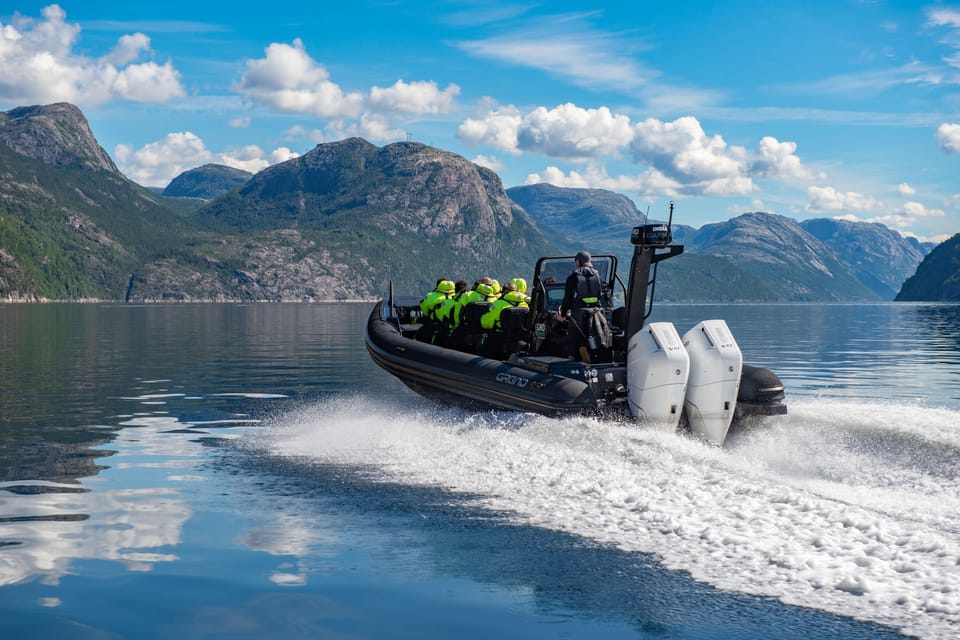
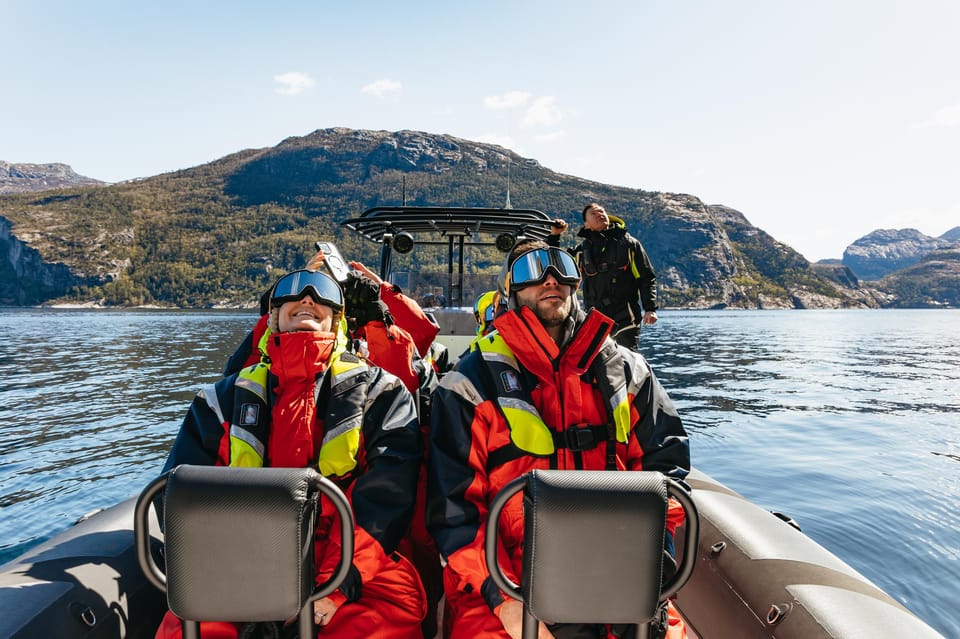
Geirangerfjord is 15 km (9.3 miles) long and walled on both sides by cliffs that rise over 1,400 m (4,593 ft) from the water. The Seven Sisters waterfall on the north wall drops seven separate streams from the plateau rim, and in July all seven are running with snowmelt-fed force, you can hear them from a boat deck 500 m (1,640 ft) away, a low roar beneath the engine noise. RIB speedboat excursions approach the falls close enough to feel the cold spray and the downdraft the cascade pulls off the cliff face. The village of Geiranger at the fjord head, with a permanent population of roughly 250, is the hub for boat departures, and the view back down the fjord from the dock is the Norway-from-above shot most visitors have already seen before they arrive. The tradeoff worth knowing: cruise ships anchor here almost daily in July, and mornings with multiple ships bring thousands of day visitors to a village built for dozens. The cruise port schedule is published online and accurate months in advance, check it before booking your fjord activity days, and aim for ship-free mornings.
Booking Tip: RIB speedboat tours and kayak excursions book 2 to 3 weeks ahead, no exceptions. Passenger ferry crossings between Geiranger and Hellesylt are more flexible but still fill on ship days. Always check cruise ship arrival schedules before booking. Avoid overlapping with arrival windows. See current small-group and private tour options in the booking section below.
Bergen City Walking and Harbor Tours
Bergen is worth two full days on its own. The Bryggen, that UNESCO-listed row of medieval wooden warehouses, leans at angles that scream structural doubt. These Hanseatic League relics date back centuries, rebuilt after every fire, most recently in 1702. Behind the main facade, alleys force two people sideways. They smell of old timber, salt air, and the faint resin of wooden walls. The Fløibanen funicular climbs 320 m (1,050 ft) to Fløyen in 8 minutes flat. From the top, you'll see the harbor, the seven peaks ringing Bergen, and, on clear days, the Hardangerfjord slicing the horizon. Down at Fisketorget, the fish market runs daily through July. Grab smoked salmon in paper cones, poke at live shellfish tanks, slurp fish soup from bread bowls. Bergen's rain-soaked reputation? Completely earned. This is Norway's wettest city. Those green hills surrounding it? They're the payoff for getting soaked. You'll get wet. Count on it.
Booking Tip: Book food and walking tours just a week ahead, even in July. No sweat. Fløibanen won't take reservations. On sunny afternoons the line stretches 30 to 45 minutes. Bring patience. The Bergen Card covers the funicular plus public transport. Two days or more and it pays for itself. Current city tour options are in the booking section below.
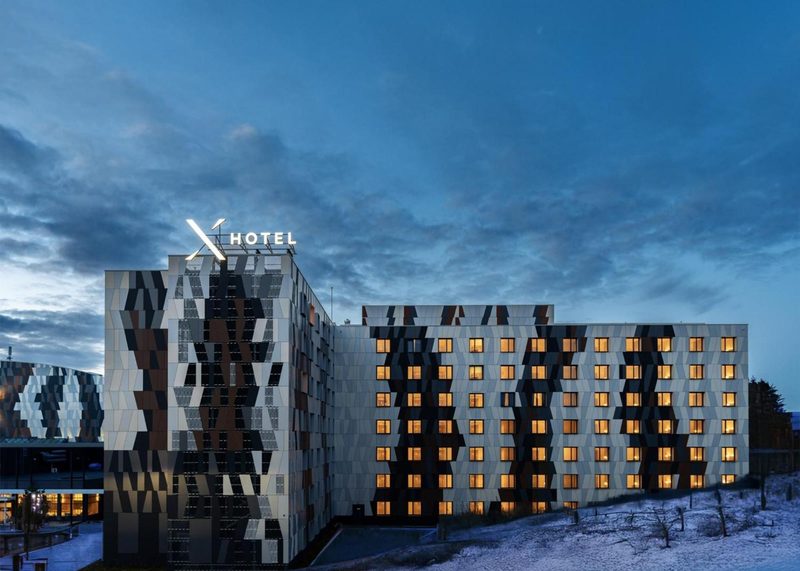
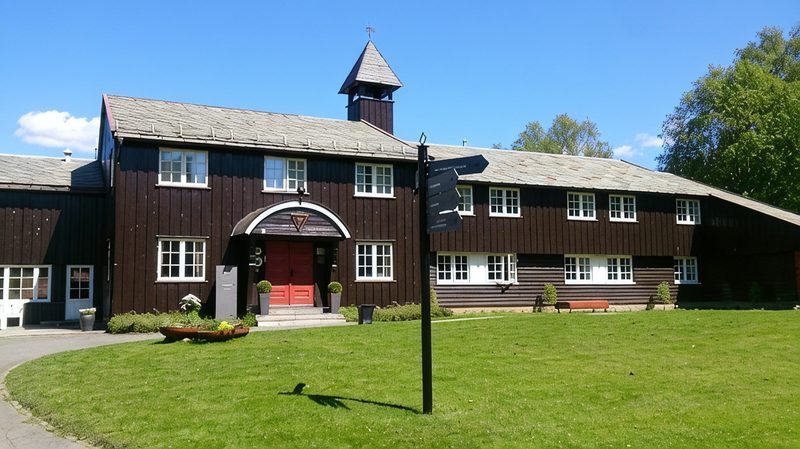
Where to Stay in Norway in July
Hand-picked hotels across price tiers for July travellers.
Packing Checklist
Bookmark this page — your progress is saved between visits
Need the full list with shopping links?
Climate-specific gear, brand recommendations, and what to leave at home.
View Norway Packing List →Essential Tips
Insider knowledge and common pitfalls to avoid
Insider Knowledge
Three cruise ships in Geiranger means 3,000 people swarming a village built for 300. Check the port schedules first. Geiranger, Flåm, and Ålesund all post arrival calendars online, dates stay accurate months ahead. One morning with three ships docked turns the Geirangerfjord or the Bryggen in Bergen into a different world. Empty pier? Different story. Plan activity days around ship-free windows, costs nothing, changes everything.
Norway's allemannsretten, the statutory right to roam, lets you camp anywhere in uncultivated land more than 150 m (500 ft) from the nearest occupied building, for up to two consecutive nights, without permission or payment. Pitch a tent on the ridge above Trolltunga. Sleep on a beach in Lofoten. Camp beside a lake in the Jotunheimen mountains. Knowing this before you build your itinerary opens considerable flexibility and changes the economics of multi-day hiking trips in Norway substantially.
Flåmsbana tickets sit outside the main Norwegian rail network, completely separate. The Oslo-to-Bergen line, the Bergen Railway, crosses the Hardangervidda plateau at 1,222 m / 4,009 ft above sea level with snow still visible in July. Advance 'minipris' tickets release weeks ahead at prices well below standard fare. Book the Bergen Railway as a journey in its own right, not just transportation, and sit on the left side northbound out of Oslo for the best plateau views. One of the finer train rides in Europe. Consistently underused as a travel experience.
At midnight in July, Reinebringen in Lofoten delivers daylight solitude, 448 m (1,470 ft) of wooden switchbacks installed after erosion closed the original trail. Hundreds crowd the route by day. After 10 PM, the path empties. You'll climb alone. The Moskenesstraumen churns in the sound below. The midnight sun brushes Lofotodden's peaks to the south. That view burns in. Set an alarm.
Avoid These Mistakes
Oslo to Tromsø is 1,800 km, London-to-Warsaw territory. Yet newcomers still picture a pocket-sized Norway. The map lies. Fjords twist asphalt into 200-km detours, ferries leave on the dot and won't wait, and the road sign that promises 80 km can devour four hours. Try to cram Bergen, the Nærøyfjord, Flåm, Aurland, Lofoten, Tromsø and the North Cape into seven days and you'll spend 70 percent of the week staring through a windshield. Pick one region instead. A single week in the western fjords, Bergen base, Nærøyfjord cruise, Flåm rail, Aurland valley hikes, delivers more memories than a frantic clockwise dash around the entire coast.
Bergen deserves more than the standard package, one night, one fjord, gone. Most visitors treat it as a way into the Nærøyfjord and Sognefjord, hitting the Bryggen waterfront and fish market once before moving on. That's a mistake. The Fløibanen funicular climbs to Fløyen (320 m / 1,050 ft), worth the ride. The historical alleys behind the Bryggen facade reward wandering. The KODE art museums hold their own. And Bergen opens up fjord areas that Oslo-based tour packages miss entirely. Skip the rush. Add another day.
Show up at Trolltunga on a Saturday without an early start and you'll join a human snake. The trail never closes in July, the sun won't quit, night hiking is legal, and at midnight on a clear evening the rock platform glows in near-horizontal amber light with zero crowd. Leave the car park at 9 PM on a Tuesday; that's the Trolltunga Instagram never sees. Between 11 AM and 3 PM on summer weekends the summit is gridlock, and the descent feels worse once tired legs meet afternoon glare.
Ready to plan your trip to Norway?
Now that you've got the research covered, here's where to go next.
Book Experiences in Norway
Top-rated things to do in Norway this July

Explore More Activities in Norway
Didn't see anything interesting yet?
Browse Viator's full catalog of tours, day trips, food experiences, and private guides in Norway.
See All Norway Tours on Viator